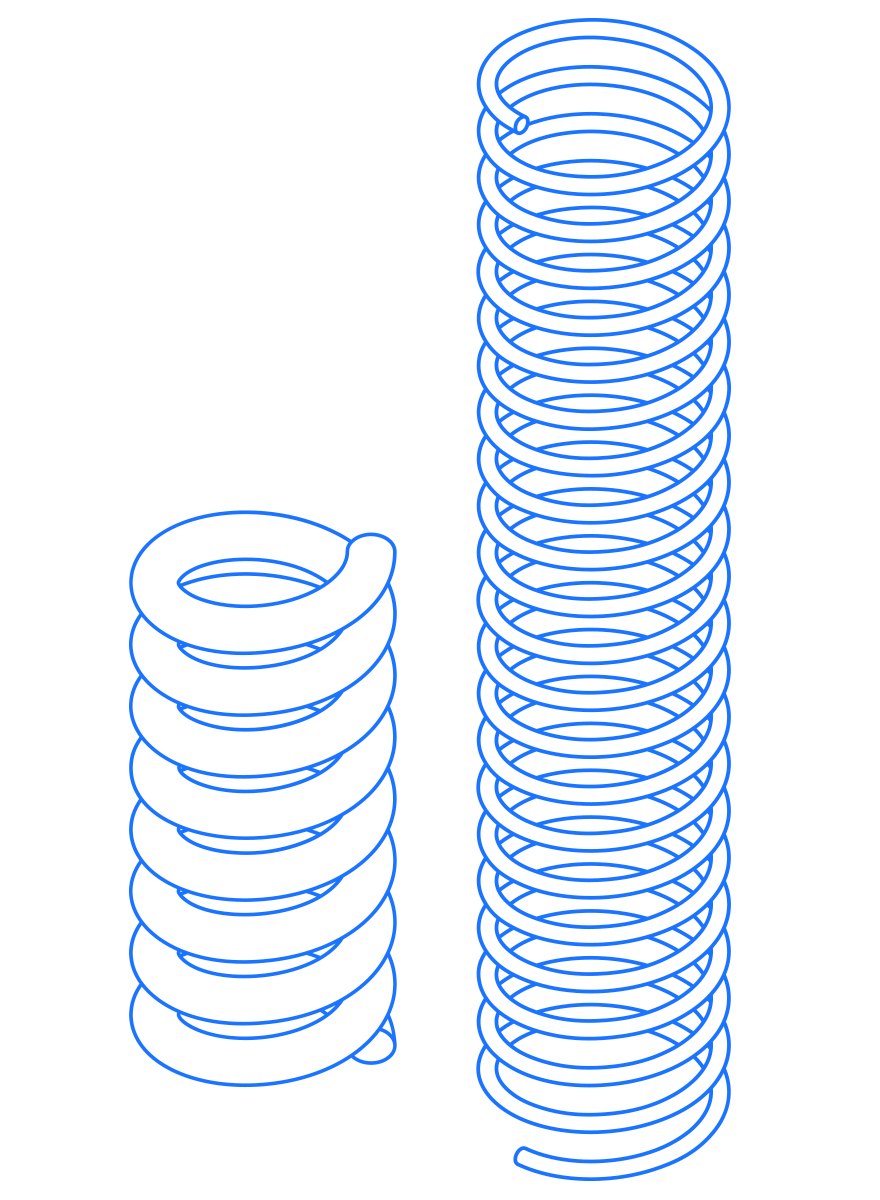
This is a spring that attaches feet to both ends to match the product it is incorporated into, utilizing the repulsive force when twisted. Compared to coil springs, it can be designed to be lightweight because it can store more energy at the same weight. The shape of the spring varies depending on the installation method and location, so it is mainly handled as a custom order. It is a spring that requires design capability.
Compression Springs
This is a spring that utilizes the repulsive force that attempts to return against the compressive force, and it is the most commonly used spring among coil springs. The basic shape is a cylindrical form with the material wound in a spiral, but the coil diameter may be shaped like a drum or barrel to change the load characteristics. Additionally, to enhance the verticality of the spring, there are end treatments such as grinding both ends or releasing the ends outward or inward, depending on the application.
Extension Springs
Extension springs are among the most widely used coil springs, second only to compression springs. They are utilized in applications where the load is applied in the tension direction, opposite to compression springs. To effectively use initial tension and minimize space, they are generally tightly wound. It is customary to create hooks at both ends to bear the load, but their design varies widely depending on the application.
Quality of Every Complexcity
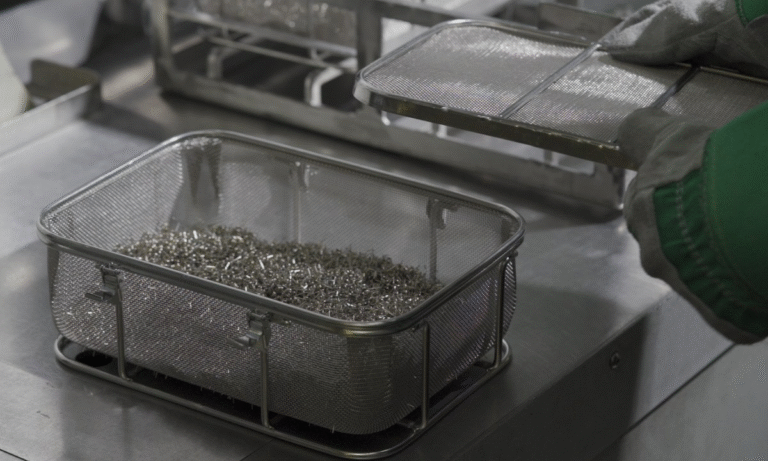
We create a range of springs from a range of materials including steels, copper and nickel alloys and others.We also have a number finishing and post-cleaning options available in-house, ranging from electroplating, organic zinc coatings and much more
A Range of Materials and Finishes
Innovative Packaging Solutions That Prevent Tangling
Talk to the experts
Have a question for our team? Our experienced team can answer any and all sales, technical, engineering and continuous improvement questions you have